Women’s Money Matters Opinion on Affirmative Action

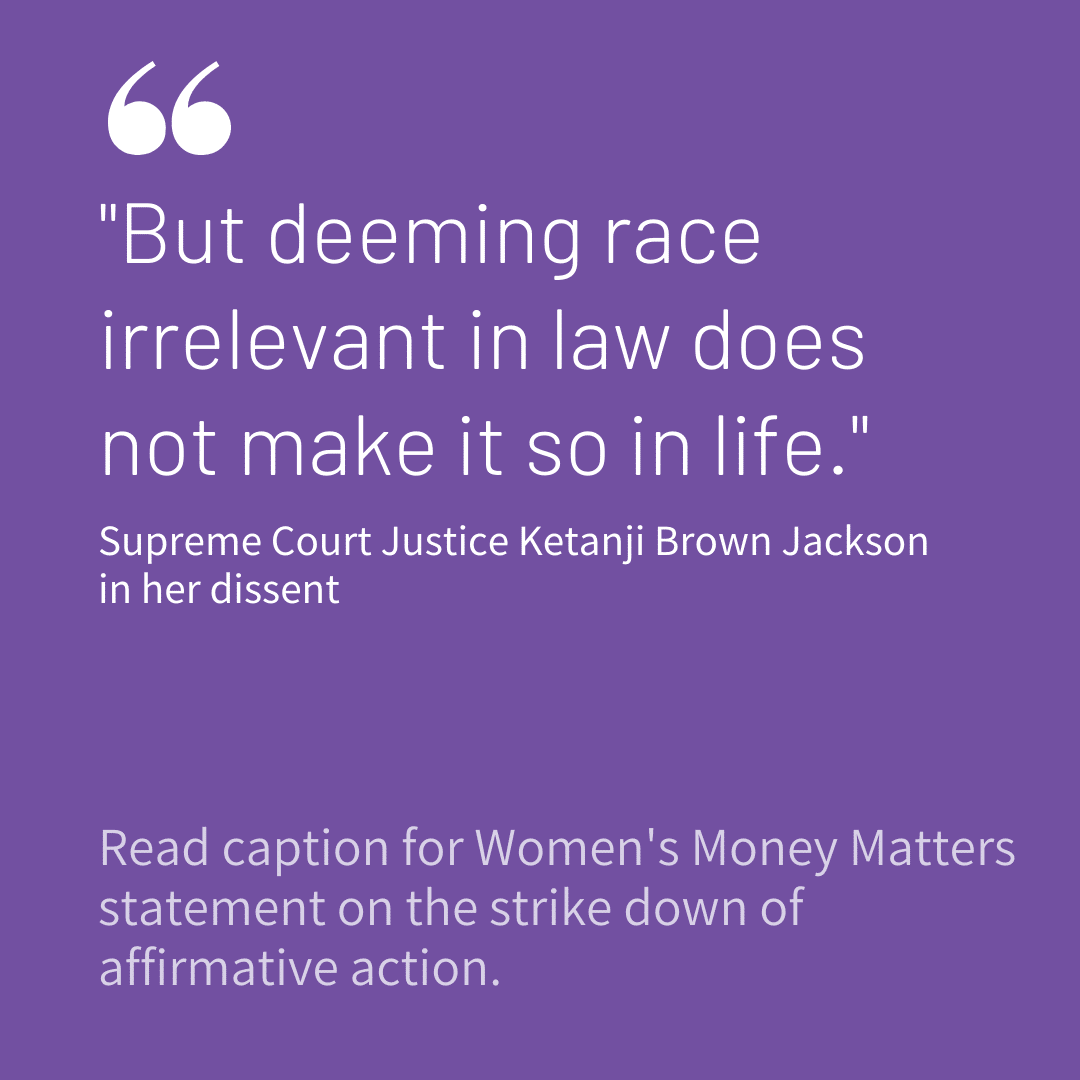
As an organization that advocates for women living on low-incomes, their families, and their communities, we are discouraged, disheartened, and disappointed by The Supreme Court’s decision to strike down affirmative action in college admissions. This decision will negatively affect the already marginalized communities we serve, who are primarily Black, Indigenous, and other People of Color (BIPOC) – communities who  already lack opportunities for economic mobility and generational wealth building. 

Affirmative action is crucial for promoting economic mobility and breaking the cycle of poverty among BIPOC people. Historically, systemic discrimination and inequality have hindered the progress of marginalized communities, particularly people of color. Affirmative action policies aim to level the playing field by providing opportunities and addressing the structural barriers that have perpetuated racial disparities. By increasing access to education, employment, and other resources, affirmative action enables individuals from disadvantaged backgrounds to overcome the obstacles they face and pursue upward mobility.

In the past, by implementing policies that promote diversity and inclusion in educational institutions, affirmative action helped to address historical disadvantages and foster equal access to quality education. This not only enhances the educational experience for all students but also creates pathways for BIPOC people to gain the skills and knowledge necessary for economic success. With improved access to education, individuals from marginalized backgrounds can secure better job opportunities, higher wages, and improved prospects for their future. Thus breaking down barriers and challenging stereotypes, affirmative action can help dismantle the structural inequalities that have hindered the economic progress of BIPOC people, contributing to the overall reduction of poverty rates within these communities.

This decision by the Supreme Court to end affirmative action will end the educational opportunities that have been essential for promoting economic mobility and lifting BIPOC people out of the cycle of poverty. Affirmative action not only benefits individuals but also contributes to a more inclusive and equitable society, where everyone has the chance to thrive and contribute to the nation’s economic growth.  
 

Important Student Loan Updates for Women with Student Loan Debt

This past week President Biden signed a bipartisan debt ceiling agreement that “codified” an end to the payment pause for student loan borrowers. In response to this seismic event, there has been a steady stream of articles about the adverse impact of the resumption of payments: according to a recent survey by Student Debt Crisis, 89% of fully-employed borrowers aren’t “financially secure” enough to restart payments and this event will have a “severe” impact on the economy. 

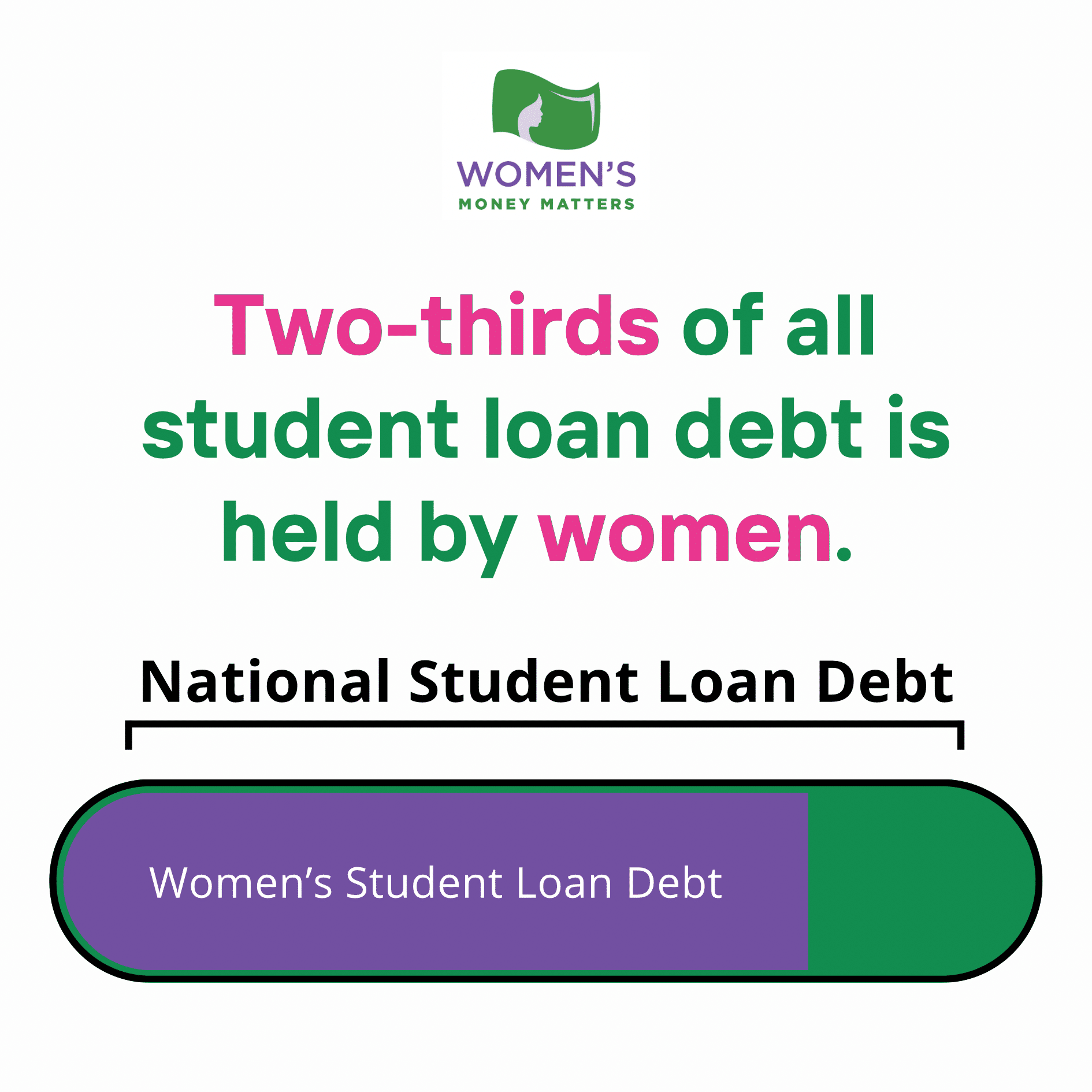
What has been overlooked is that the lives of WOMEN will be disproportionately impacted by this event because WOMEN account for almost 2/3rds of student loan debt!!

        Harvard Ed School graphic

“I can promise you that women working together – linked, informed and educated – can bring peace and prosperity to this forsaken planet.” Isabelle Allende

If you are nervous and understandably confused about the resumption of student loan payments, you are not alone. If you are worried about managing this new monthly payment, you are not alone. The good news is that by working together and taking advantage ofthe resources available to borrowers in the WMM community, you can find a workable solution. The key is to become fully informed about your loans and understand the menu of manageable repayment options.

What Women Borrowers Can Do Now:

  • Log into your account at the federal student aid website: https://studentaid.gov/
  • Verify that your contact information is accurate, including mailing & email address
  • Review your loan balances, print out a copy for your records and verify your loan servicer; every borrower is assigned a company (loan servicer)
  • If you are unemployed, do not ignore your payment; if you are enrolled in an Income Driven Repayment Plan (IDR), you might be eligible for 0$ per month payment
  • Make sure you are enrolled in a more affordable income-driven repayment plan and use auto-pay; it automatically provides you with a .25% savings on the loan interest rate
  • Begin to budget for the resumption of federal student loan payments in September

There is no need to panic. “Working together,” WMM can help you to create a manageable and affordable repayment plan. 


Robert J. Miller, Advisor for Women’s Money Matters


Women’s Money Matters Welcomes New Board Members

Media Contact: Ariana Contreras 

(acontreras@womensmoneymatters.org

520-456-5965


Women’s Money Matters Welcomes New Board Members

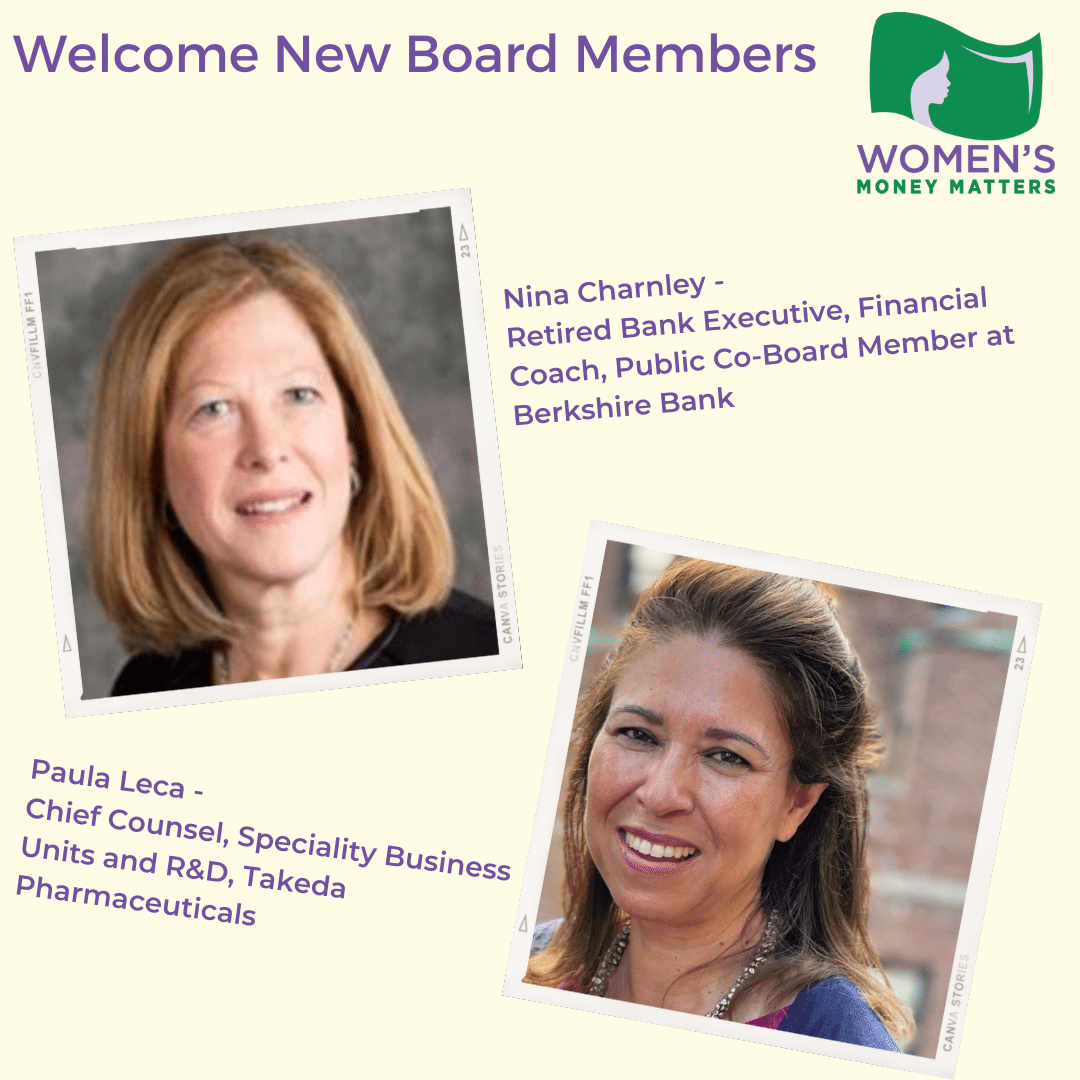
Nina Charnley and Paula Leca 


BOSTON Women’s Money Matters, a non-profit organization that builds the financial wellness, confidence, and security of women living on low-incomes is pleased to announce its two new members of the board of directors, Nina Charnley of Boston, MA and Paula Leca of Dedham, MA. 


Danielle Piskadlo, Executive Director of Women’s Money Matters, shares, “We are growing and innovating our financial wellness programs and how we reach more women so this is a pivotal time to bring on two new board members with such amazing qualifications and experience.” 


Charnley is a retired bank executive, a financial coach, and Public Co-Board Member at Berkshire Bank. She brings a unique and diverse set of executive leadership, digital transformation, financial, risk and regulated industries, customer experience and consulting expertise to the board room. She has successfully grown, restored and built businesses in every division of Fortune 100 financial services companies serving millions of customers. Nina served as Head of Enterprise Customer Experience for TIAA, a Fortune 100 financial services company with over $1 trillion in assets under management and 5 million customers. As a Senior Managing Director, she was a member of the Executive Leadership Group, a leader for the Digital Transformation Team and Chaired the Customer Experience Board which she created as a governance entity. Over her career in financial services she has run multi- billion dollar businesses, reported to the Board of a large, public regional bank as head of Risk, developed and launched an online bank and several digital products and capabilities. While at Bank of America she created the strategy, infrastructure, template and accountabilities matrix for Bank of America’s Diversity, Equity and Inclusion program. 


Leca is Chief Counsel, Specialty Business Units and R&D at Takeda Pharmaceuticals. She joined Takeda in 2015 as associate general counsel and became vice president and head counsel, Oncology in 2019. Previously, Leca held positions at the New York Genome Center, Vertex Pharmaceuticals, Millennium Pharmaceuticals and Goodwin Procter. She earned a Bachelor of Arts degree from Stanford University and a Juris Doctor degree from Harvard Law School. Leca also serves on the board of directors for Pine Street Inn, New England’s largest nonprofit serving people who are homeless with the intention of providing them with permanent housing.


To learn more about Women’s Money Matters or to get involved with the organization, please visit www.womensmoneymatters.org.    

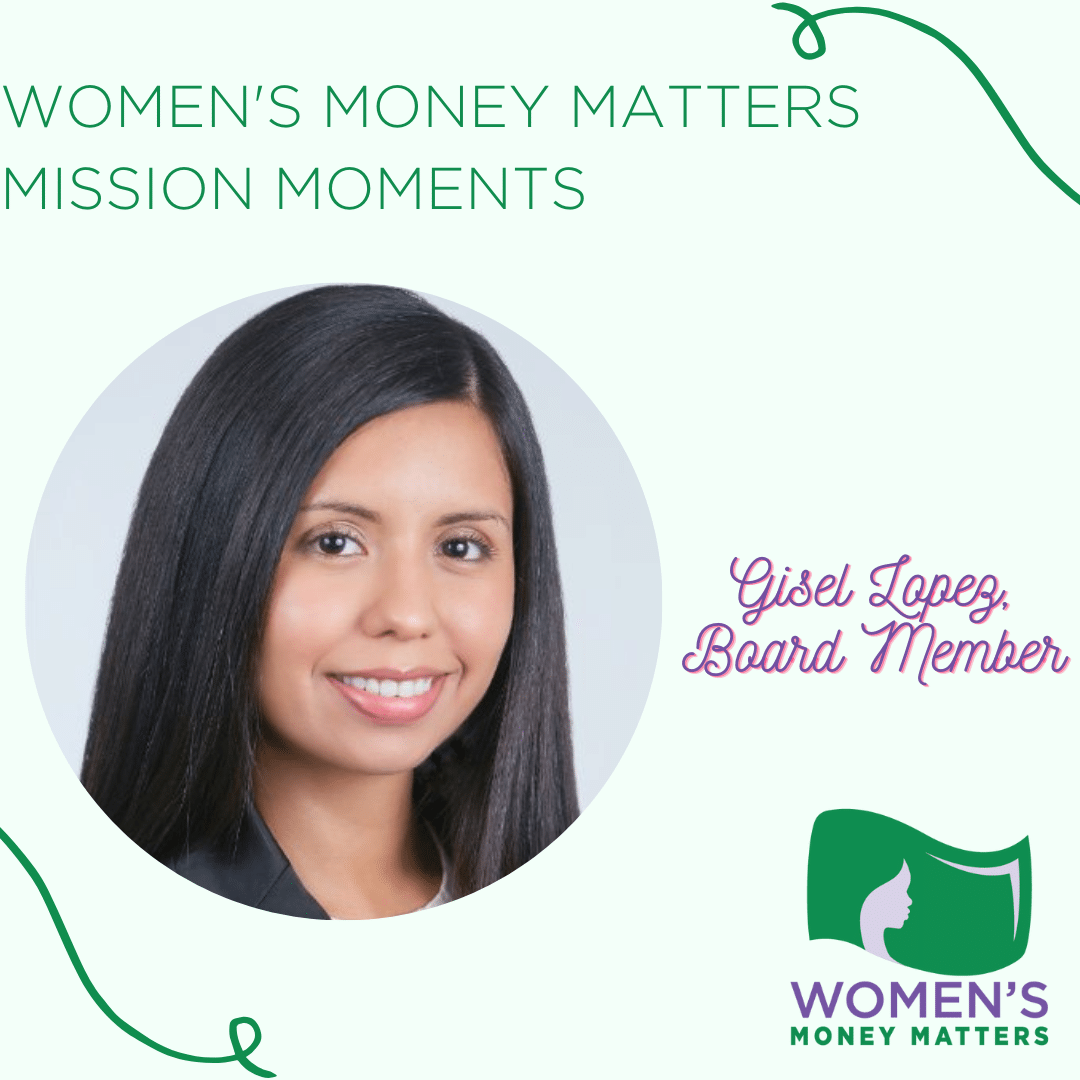
Gisel Lopez: Insights on Courage and Mentorship in Navigating Life’s Uncertainties

As a successful businesswoman and member of the Women Money Matters’ Board of Directors, Gisel Lopez exudes a quiet confidence and poise. However, it wasn’t all that long ago that Gisel found herself new to the U.S. and uncertain about how to navigate the culture, including how to get her financial footing.

Gisel moved to the U.S. from Peru in 2015. Gisel explains, “I found it difficult to navigate my finances in the U.S. Unlike in Peru, I needed to establish a credit score to be eligible to access credit. Also, I did not understand the different methods to save for retirement and the different terms associated with filing taxes felt confusing.”

Like many, Gisel turned to Google to get some answers. While some of the information online was very helpful, not all of it was relevant, or even necessarily in her best interest. Fortunately, her manager at the time was also an immigrant and guided her with her approach to personal finances. “I was so lucky to have a mentor to answer my financial questions,” said Gisel.“That is why I am so passionate about Women’s Money Matters mission and its coaching model. I truly believe that as an organization we can support women on their journey to financial independence.”

Gisel has witnessed first hand the importance of women achieving financial independence. At 14, Gisel’s parents divorced, and Gisel’s mother no longer had the financial support of her husband. Without a college degree, Gisel’s mother had to be creative about how she’d support her children. They moved in with Gisel’s grandparents and her mother began selling things door to door. It was a much different life than they’d had before. However, with a lot of hard work, Gisel’s mother later went on to become a successful realtor and now she managed her own properties.  “My Mom showed such tremendous courage as she began a new life for us,” said Gisel. “Even though it wasn’t easy, we are all stronger than we think.”

When asked what advice she’d give to others, Gisel shared, “Find a community that has your best interest at heart. Every day we are faced with different and often difficult decisions and having a community makes it so much easier.”

Women’s Money Matters Graduate Speaks on the Impact of Cliff Effects

PRESS RELEASE

For Immediate Release:

December 6, 2022

Media Contacts: Ariana Contreras

(acontreras@womensmoneymatters.org)

520-456-5965

Women’s Money Matters Graduate Speaks on the Impact of Cliff Effects

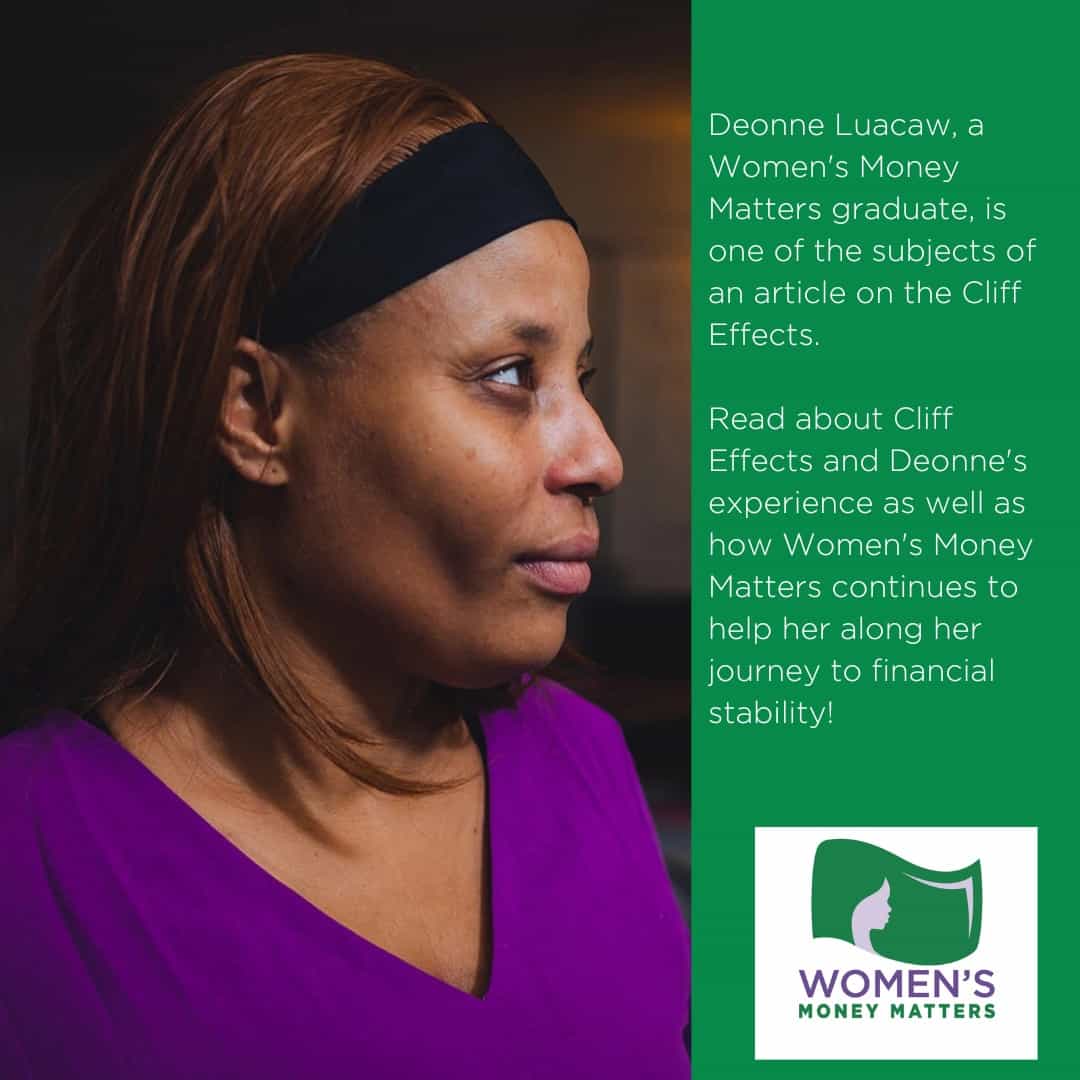
Deonne Luacaw spoke on the impact the cliff effect has had on her finances and employment. 


Women’s Money Matters, formerly Budget Buddies, which builds the financial wellness, confidence, and security of women living on low-incomes, connected program graduate Deonne Luacaw to be featured in an article by Fed Communities about the economic cliff effects. The cliff effect is the gap between what someone will be earning in a new job and the value of the public assistance benefits that person loses as a result. The cut off for benefits is often lower than the income needed to earn to replace that benefit. 


Danielle Piskadlo, Executive Director of Women’s Money Matters, on the cliff effects “In our financial wellness programs our participants frequently share their struggles with the cliff effect and that they have the desire to enter the workforce or seek better paying jobs. However when they increase their incomes they can’t afford childcare costs, it will change the amount of their housing vouchers and increase their rent, plus the loss of food assistance would be difficult due to the rising costs of essentials like groceries.”


Due to the cliff effect, people like Luacaw who get financial support from public assistance can end up worse off after joining the workforce, accepting a pay raise or promotion, or moving to a better-paying job. Luacaw shared, “We’re going to write out my goals, how much I can put into savings, when to pay my rent—these are the priorities. Before [Women’s Money Matters], I was never paying my bills on time. Now, I have steps. I have a calendar with reminders, just to anticipate these things. I never had a checking account. They helped me navigate through that. It’s these things that I wasn’t taught. I was just trying to survive.”

Read the full article here

# # #

About Women’s Money Matters:

Women’s Money Matters, formerly Budget Buddies, builds the financial wellness, confidence, and security of women living on low-incomes through a unique program that combines instructional workshops and personal, one-to-one coaching.

About Fed Communities 

Through applied research, public programs, outreach and technical assistance, Federal Reserve community development teams help promote economic growth and financial stability in low- and moderate-income communities across the country.

Women’s Money Matters Graduate Speaks on Inflation’s Impact on NBC Nightly News 

Women’s Money Matters Graduate Speaks on Inflation’s Impact on NBC Nightly News 

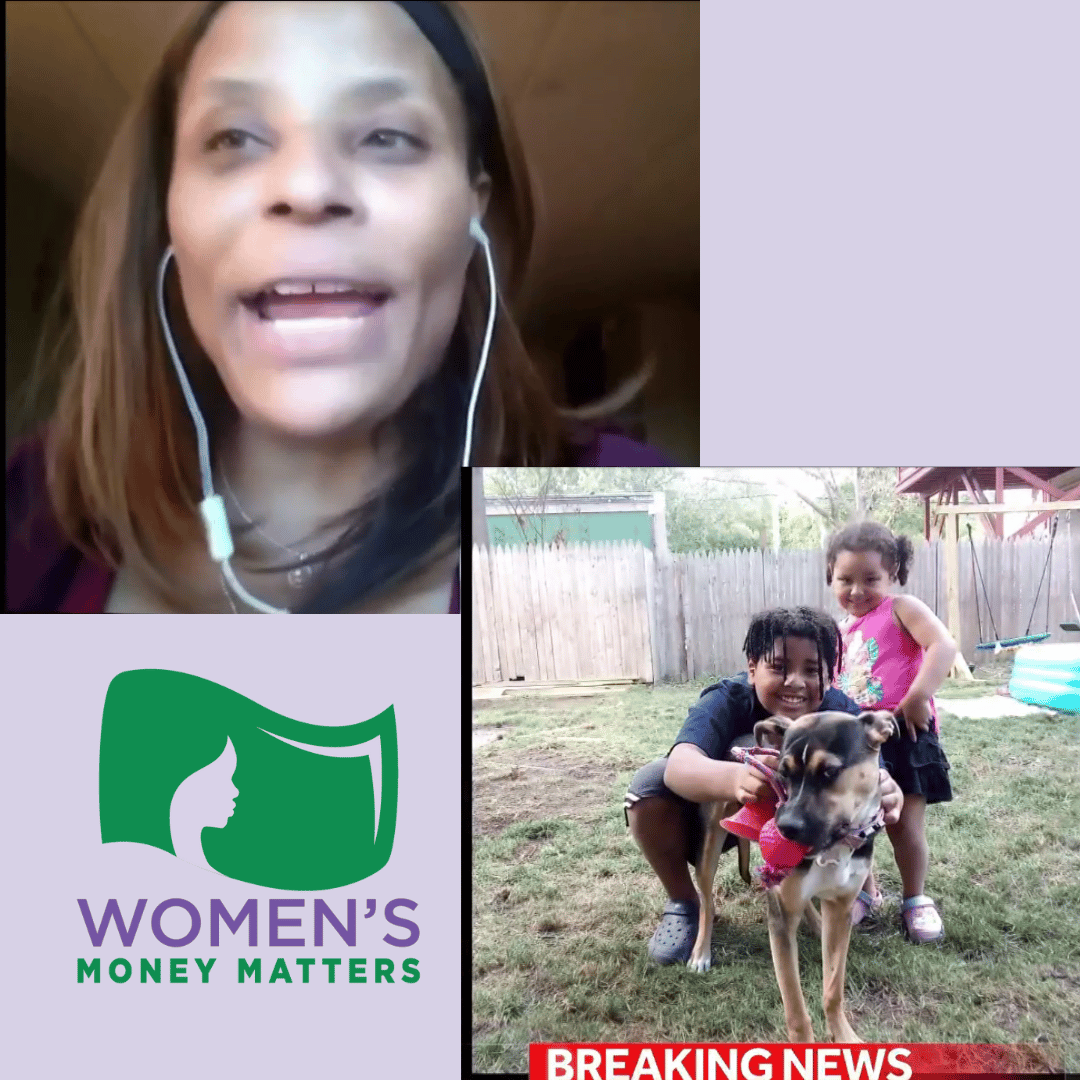
Deonne Lucaw spoke on the impact inflation has had on her finances. 

Women’s Money Matters, formerly Budget Buddies, which builds the financial wellness, confidence, and security of women living on low-incomes, connected program graduate Deonne Luacaw to NBC Nightly News with Lester Holt, bringing voice to the impact inflation is having on women living on low-incomes. Lucaw shared with NBC about the burden placed on her as a single mother providing for her children due to the increased cost of necessities like utilities. 

Lucaw shared “ We are hanging on by a thread. Instead of paying the whole light bill, I may have to put something down on it, so I can get my kids the other things they need.” 

Danielle Piskadlo, Executive Director of Women’s Money Matters said, “We appreciate Deonne’s willingness to share her experience to highlight how macroeconomic conditions and systemic inequalities are so often felt most by those living on the economic margins. In the course of our programs we hear so many women share similar experiences as they face these barriers and struggle with increasing prices and cost living.”

Women’s Money Matters provides financial wellness programs for women that include interactive expert-led workshops, one on one coaching from a trained volunteer, and small supportive peer cohorts. Women’s Money Matters connects participants to direct financial relief, community resources, and financial experts. 

Watch the NBC Spotlight here

# # #

About Women’s Money Matters:

Women’s Money Matters, formerly Budget Buddies, builds the financial wellness, confidence, and security of women living on low-incomes through a unique program that combines instructional workshops and personal, one-to-one coaching.

Women’s Money Matters Awarded $25K Grant from the Women’s Fund of Essex County

Women’s Money Matters Awarded $25K Grant from the Women’s Fund of Essex County

The award is in honor of WMM’s exemplary work to financially empower women  

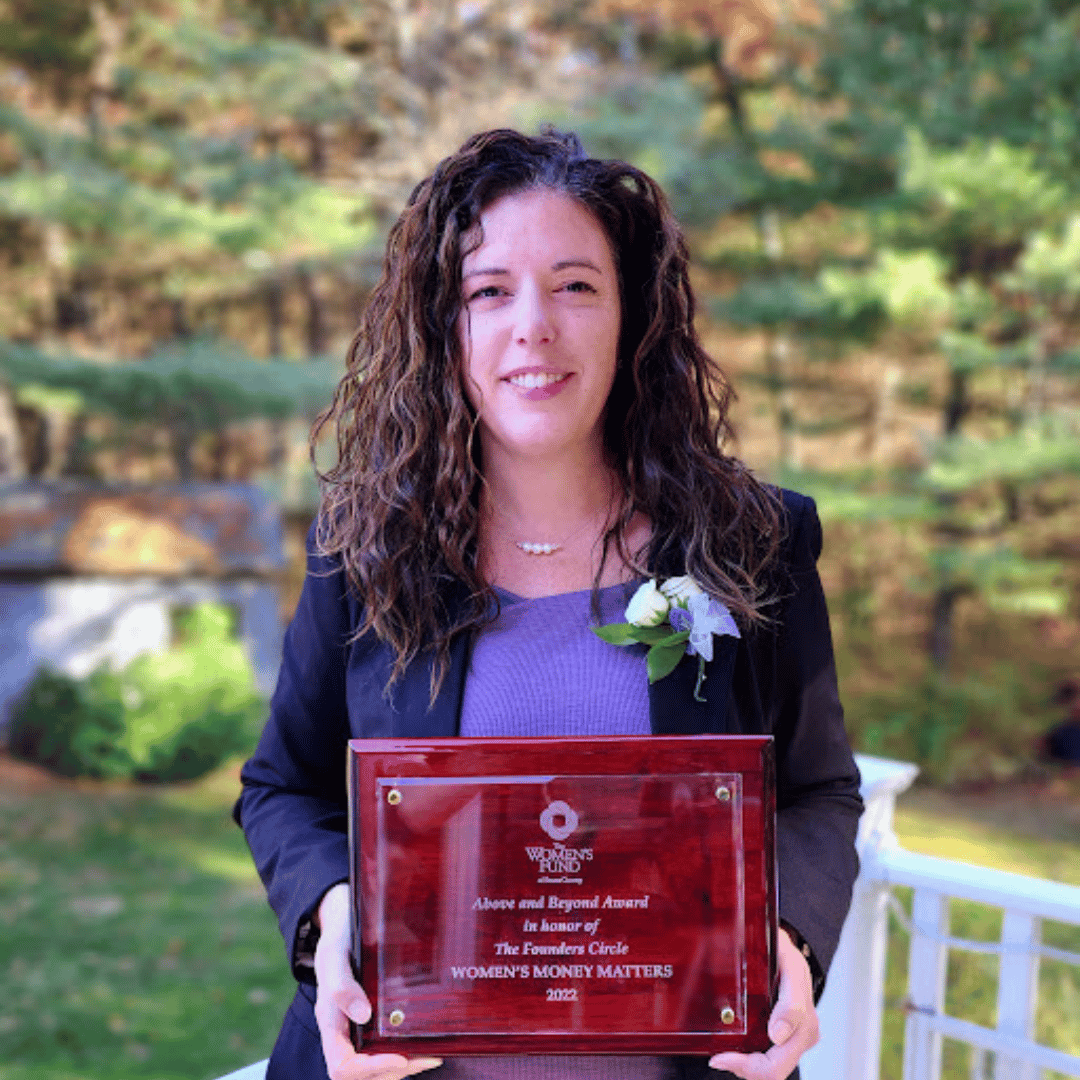
Women’s Money Matters, formerly Budget Buddies, which builds the financial wellness, confidence, and security of women living on low-incomes, today announced it received The Women’s Fund of Essex County’s 2022 Above and Beyond Award in Honor of the Founders’ Circle. This unrestricted $25,000 grant is awarded annually to a non-profit whose exemplary vision, leadership and impact sets an exceptional standard in addressing complex and overlapping social issues impacting women, families, and communities. Women’s Money Matters Executive Director Danielle Piskadlo shares, “We are honored to have been chosen for this award and will continue to empower even more women in Essex County on their financial wellness journey.” 

Trish Moore, co-president of The Women’s Fund said, “WMM has consistently demonstrated excellence in their programs that promote women’s economic self-sufficiency, which is a core funding priority for The Women’s Fund of Essex County.” Moore added, “We are thrilled to make this grant to WMM because we know they will go above and beyond to help create positive change in women’s lives.”

Women’s Money Matters provides financial wellness programs for women that include interactive expert-led workshops, one on one coaching from a trained volunteer, and small supportive peer cohorts. Women’s Money Matters connects participants to direct financial relief, community resources, and financial experts. Women’s Money Matters has served nearly 400 women in Essex County to date. 


# # #

About TWF:

Since 2003, the Women’s Fund of Essex County has raised and awarded more than $3 million to more than 150 high-impact non-profit partners that provide local women, girls, and their families with the resources they need to find success at work, school, home, and life. The organization has been recognized with the George Peabody Award for Leadership in Philanthropy by the Essex County Community Foundation and the Champions Award for Community Impact by North Shore Community College, and the Constance Grasso Award from the YWCA of Greater Newburyport. The Women’s Fund of Essex County is an all-volunteer organization supported entirely by generous donors whose philanthropy supports a portfolio of programs impacting local women and girls. (thewomensfundec.org)

The Women’s Fund of Essex County is a field of interest fund of the Essex County Community Foundation.


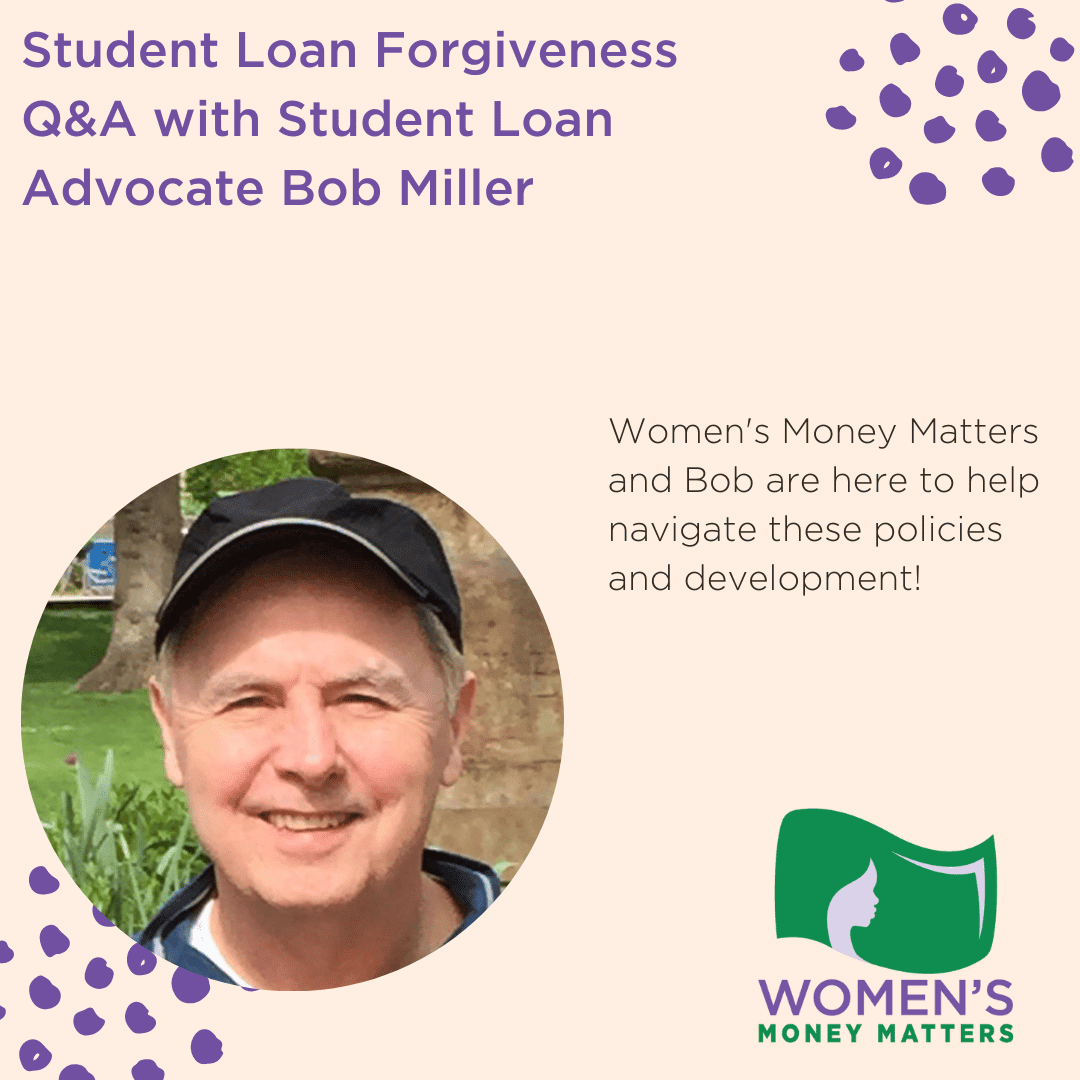
Student Loan Forgiveness Q&A with Student Loan Advocate Bob Miller

Bob Miller is a long-time financial consultant and Women’s Money Matters Advisory Group member and we appreciate his time and expertise answering these student loan forgiveness FAQs.

How Student Loan Forgiveness Impacts You

According to the American Association of University Women, women hold the majority of student loan debt in the United States, totaling more than $900 billion. When they start school, women take on greater debt than their male counterparts, and when they graduate, are already faced with higher income gaps, creating even more disparity. 

Women’s Money Matters has heard from its participants over the years about the strain that student loan payments cause on their budgets. 

On August 25, President Biden announced a new student loan forgiveness initiative to assist Americans burdened by their mounting student loan debt. Women’s Money Matters spoke with our Advisory Group Member Bob Miller to dive into some of the details about the effects this initiative will have on individuals. 


What is the initiative that President Bident outlined and how do I know if I qualify? 

The forgiveness plan as proposed will eliminate $10,000 in student loan debt for individuals earning less than $125,000 per year (or $250,000 if you’re married and file jointly). 

If you’re a Pell Grant recipient, you may be eligible for an additional $10,000 loan forgiveness. If you are not sure if you received a Pell Grant, you can verify that you’re a Pell recipient by accessing the link: www.studentaid.gov and clicking on the section “My Aid.”

All loans must have been taken out prior to July 1, 2022 to qualify.


How will this impact my monthly payments? 

In the case of Income Driven Repayment Loans, or IDR Loans, monthly payments would be reduced to 5% from the current 10%, with any remaining balance forgiven after 20 years of payment. 


How can I make sure to take advantage of this initiative? 

The Department of Education should have access to your income data and automatically grant the loan forgiveness. If that doesn’t happen, you can visit the Department of Education’s loan website to submit a forgiveness application, which will be available in early October 2022. 


Do I need to start making payments on my loans in the meantime?
No, the current federal “payment pause” will be extended one final time to December 31, 2022. In the meantime, be sure to verify that all your contact information is up to date with your loan servicer using the Department of Education’s loan website.


What if I have private loans? 

You should look into refinancing options before the Fed raises its rates. 

Women’s Money Matters understands how confusing the student loan process can be and is available to offer support to all prior participants navigating this new development. You can reach out to us at info@womensmoneymatters.org

If you’re interested in learning more about financial wellness, please visit our website to learn more about the programs offered.

Women’s Money Matters Welcomes New Board President & Executive Committee

Women’s Money Matters Welcomes New Board President & Executive Committee

Robin Toof is stepping down after 10 years of dedicated service


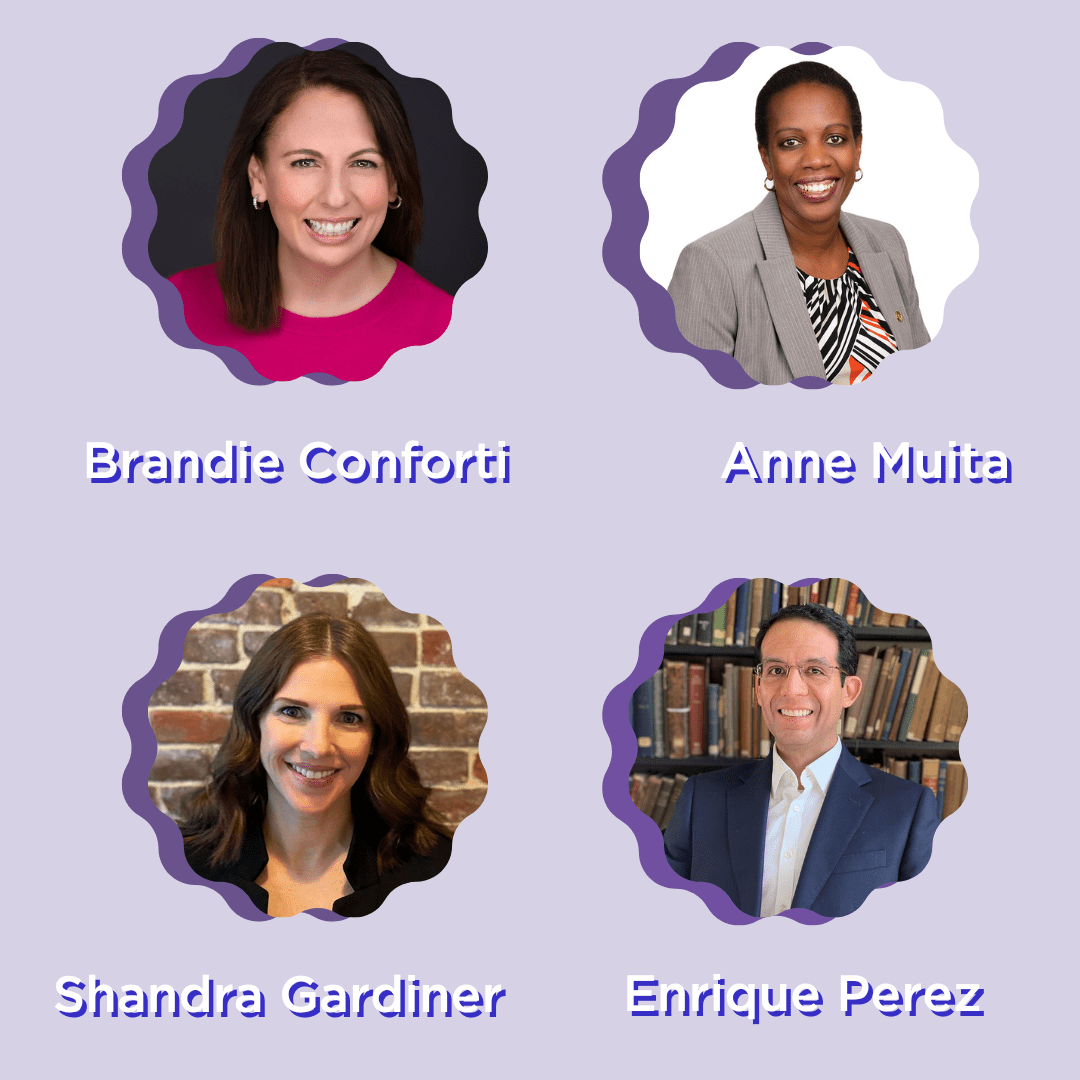
BOSTON Women’s Money Matters, formerly Budget Buddies, is pleased to announce its new President for its Board of Directors. Robin Toof, Co-Director at the Center For Community Research & Engagement at the University of Massachusetts Lowell, who has supported Women’s Money Matters for ten years will be replaced as Board President by Brandie Conforti, Chief Global Development Officer at JA Worldwide.


“It is perhaps cliché to say this is with a heavy heart that I step down, but it has been rewarding to be a part of something so real and so good, to get to know the Board members and the Executive Director, and to know I may have had a hand in the successes of this great organization,” Toof said. “I have had a front row view of an organization, first led by two remarkable women with a dream, passion, and energy, grow from serving women in a few groups a year to reaching hundreds through innovative flexible methods.”


“Robin has had a profound impact on the growth of Women’s Money Matters over the last ten years and it has been a pleasure working with her,” said Danielle Piskadlo, Executive Director of Women’s Money Matters. “We are so grateful for Robin’s dedication to our mission and success.”


Toof is succeeded by Conforti, who served as the vice president of the Board. 


“I am excited to step into this role and to support Women’s Money Matters as it continues to expand its work and reach through innovative new techniques and methods,” Conforti said. “I am proud to support an organization that is so deeply dedicated to empowering women and ensuring they have the resources they need as they take control of their financial future and work to create a more secure future for themselves and their families.” 


In addition to this change, Women’s Money Matters is pleased to announce it’s additional Executive Committee members:

  • Senior Credit Analyst with First Republic Bank Anne Muita of Acton will now step into the role as Vice Chair.
  • Managing Principal & Chief Investment Officer at Mission Park Capital Enrique Perez of Cambridge will now serve as Clerk.
  • Chief Financial Officer of Massachusetts Commission for the Blind Shandra Gardiner of Boston will take over as the board treasurer.


WBUR Highlights Women’s Money Matters Initiative

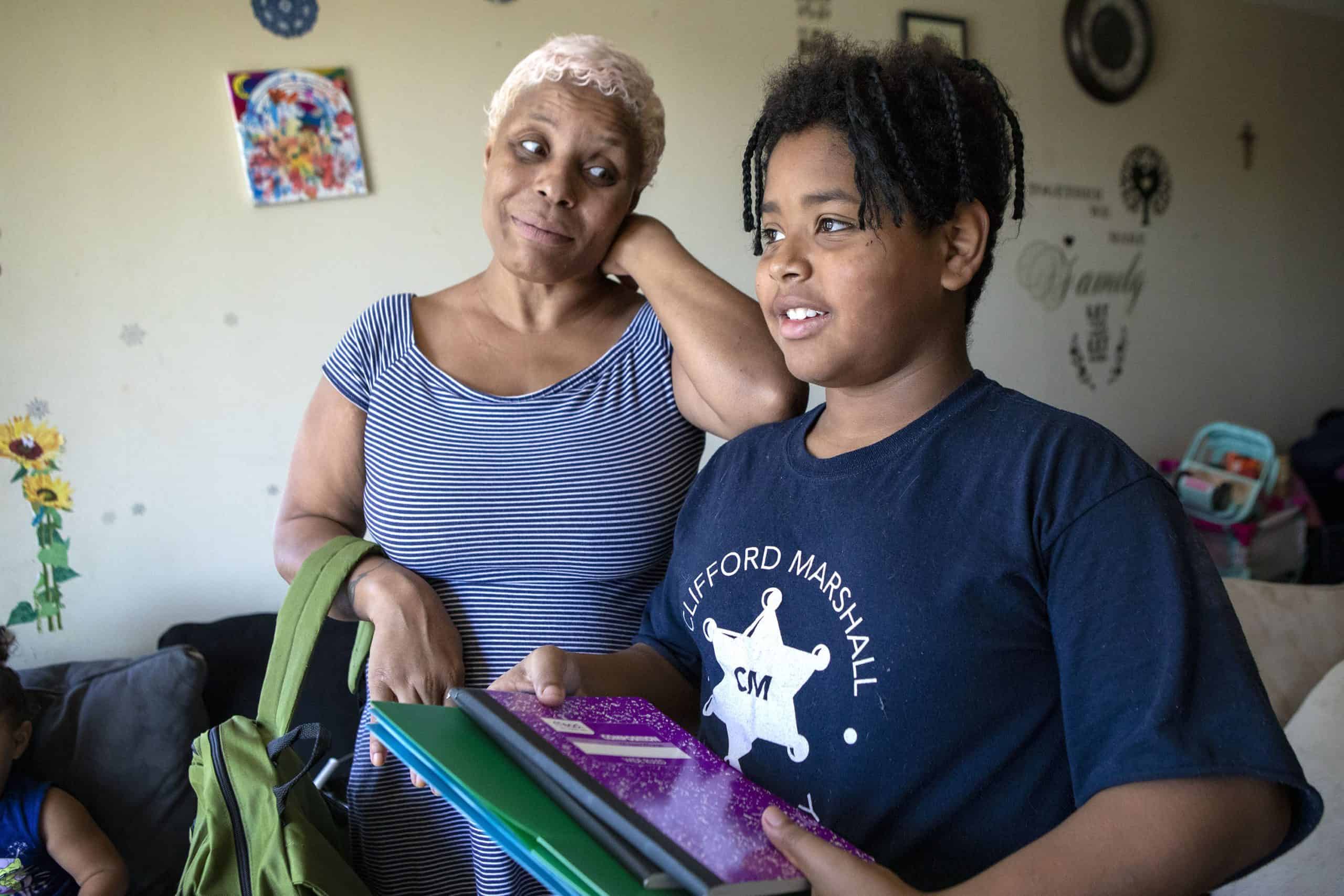
Women’s Money Matters graduate Deonne shares with WBUR the financial planning skills she is utilizing from our financial wellness program to navigate this back to school season with two kids and high prices. “I had to start early, because the prices are so high,” Luacaw said. “You have to get the right deals at the right time.”

Women’s Money Matters recognizes the cost of living increases as a major challenge for women living on low-incomes, since the cost of everything from necessities to childcare to housing prices continue to increase. “According to federal data, prices were up about 7% in greater Boston in July compared to the same time last year.” 

Danielle Piskadlo, our Executive Director, shares in this article that many of our participants, “Lost wages during the pandemic, and their incomes still haven’t fully recovered and then on the heels of that, having the rising inflation and rising prices is just a whole new dynamic.” 

“We’re very cognizant of the fact that you cannot budget your way out of poverty,” Piskadlo said. “Larger barriers like the lack of housing or affordable child care… those do impact the women that are in our programs and their finances.”

In surveys our participants have cited rises in prices on utilities, gas, and groceries, as reasons making ends meet has been even more difficult than usual. 

Many thanks to Yasmin Amer for highlighting this important financial challenge that many women in our communities are facing as they work to give their kids the best back to school start possible. 

Read or listen to the article here: 

https://www.wbur.org/news/2022/09/06/education-inflation-money-budget-expensive